Least Common Multiple

Summer 2017
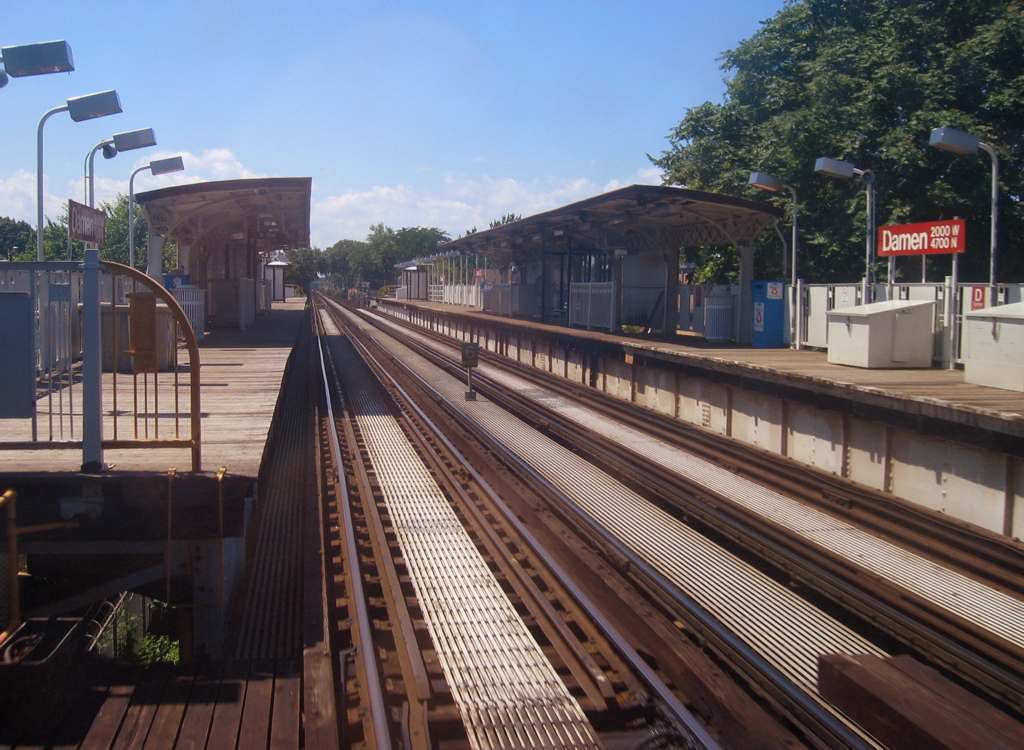
There's a playlist on my Spotify called Summer 2017. I made it for my, then daily, commutes into work via Metra or L.
The north side of Chicago in summer has a specific quality of light — low and gold in the mornings, the kind that makes even a train platform feel like it means something. This playlist sounded best with my headphones in, standing in that particular transit trance where you're not quite anywhere. Not home, not work. Suspended (but hopefully no train delays).
The playlist knew what it was for: Com Truise. Shigeto. Photay. Mux Mool. Warm, textured, syncopated but never aggressive. Music that held the body in motion while letting the mind go somewhere else. Music that calibrates.
I've always used music this way. Silence for deep work. Classical when I need to focus but stay soft. IDM when I'm building something and need energy without noise. It's infrastructure for the moment needed. A state I'm trying to get into, and being surrounded by the right sound is a faster route than mere willpower.
Chicago gave me this. The downtown rush at 8am, all glass and concrete and forward motion. Then the train back north in the evening, the city softening, green tree-lined streets catching the last of the gold. Chicago in summer has two golden hours worth staying awake for. I lived for both of them.
I still have the playlist. I still reach for it on hard days.
H0N3Y
Chicago has always understood rhythm as a physical thing. Not a theory. Something you feel in your sternum before you name it.
The music that came out of this city's dance floors figured out: through bodies, through years of call and response between dancers and DJs. Patterns so intricate that the science of what they were doing to people's brains took decades to catch up. The beat changed because the dancers needed it to, evident in the footwork that pervaded the city for years.
Machinedrum carried that lineage out of Chicago and into his own production. H0N3Y doesn't tell you where the downbeat is. It suggests it, withholds it, offers it and pulls back in fast succession. Your brain chases the grid the whole time, filling in what the music leaves open. Something almost conversational about it. Like jazz that way. The implied note landing harder than the played one.
I didn't have language for it on the L. I just knew certain music made the commute disappear. Made me arrive somehow clearer than when I left. What I was experiencing, without knowing it, was my nervous system doing math.
The Math
A polyrhythm is simple to define and disorienting to hear. Two rhythms running simultaneously at conflicting tempos — not taking turns, but layered on top of each other in real time. 3 beats against 4. 5 against 7. Each pattern following its own logic while the other does the same.
What makes it interesting is what happens at the resolution point.
Every polyrhythm has one. The moment both rhythms land on the downbeat together — the mathematical least common multiple of their cycle lengths. 3 against 4 resolves every 12 beats. 5 against 7 takes 35. The longer the ratio, the longer the wait. And in that wait, your brain starts predicting. Actively. Continuously. Running a quiet background calculation, anticipating when the patterns will finally converge.
That anticipation isn't passive. It's computational. The brain is doing work that makes my ears tingle. The tension builds towards my center and then outwards again.
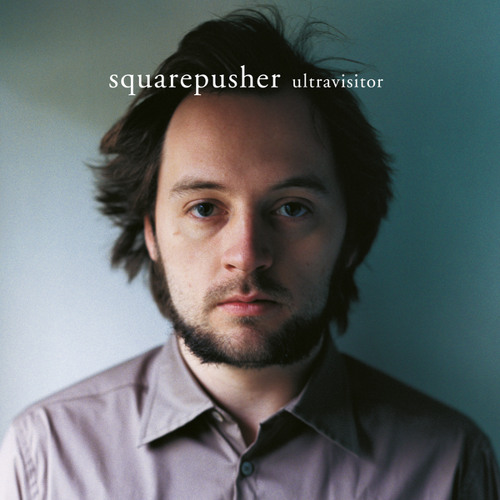
Tom Jenkinson — Squarepusher — understands this structurally. He came up through jazz, trained on bass, and the formal theory shows. Iambic 9 Poetry, from his 2004 album Ultravisitor, is almost a demonstration of what a polyrhythm feels like slowed down enough to observe. The title is already doing something: iambic meter is a poetic rhythm pattern, unstressed then stressed, a counting structure borrowed from language. He named a bass composition after a syllabic ratio.
Fretless bass, space between notes, a patience the faster tracks don't have. It makes the math legible. Same destination. Different routes in.

Pentimento
A friend sent me Pentimento during the afternoon lull of a workday. No context. Just a link.
I pressed play expecting to half-listen. That's the deal with music during work - at least for me - it runs in the background, holds the ambient space, stays out of the way. Pentimento didn't stay out of the way.
It's a collaboration between two Australian producers, Mr. Bill and Spoonbill, the latter of whom started as a drummer. There's a difference between a producer who thinks about rhythm and one who grew up inside it, whose body learned the subdivisions before the mind named them. Pentimento sounds like both of those things happening at once.
The track is upbeat. Genuinely joyful in places. Something in its structure requires you to follow it with attention. The patterns layer and pull apart and layer again. Your brain keeps reaching for the landing and finding the rug slightly moved.
And then when it lands, that little knot of tension is released. I had to stop working 30 seconds into the track (like a mental freight train screeched to a standstill). I couldn't be somewhere else mentally at the same time. I had to be in the room with it.
I came back to my work afterward noticeably calmer than before, but energized at the same time. A bit of a reboot seemed to happen. The track had done something to my nervous system that I hadn't consented to and couldn't explain.
Entrainment
Brainwave entrainment is the brain's tendency to synchronize its own electrical oscillations to external rhythmic stimuli. It's not a metaphor. It's a measurable neurological event.
The brain operates in frequency bands. Beta waves (14-30 Hz) dominate when you're alert, focused, a little stressed. It's the default working state. Alpha waves (8-13 Hz) appear when you're relaxed but present; the soft focus that comes after a good meditation or a long walk. Theta waves (4-8 Hz) are deeper still — the hypnagogic edge between waking and sleep, associated with creativity, flow states, and the quieting of the default mode network. That last one is the part of your brain that makes lists while you're trying to exist. The part that rehearses conversations you haven't had yet.
When the right rhythmic stimulus arrives, the brain starts to follow. Subconsciously and involuntarily. The oscillations shift toward the frequency implied by the pattern. Meditation traditions understood this for thousands of years: drumming circles, chanting, rhythmic breath. The technology is ancient though the explanation is recent.
Polyrhythms are particularly effective because of the prediction load. It's sustained background calculation between resolution points which occupies the cognitive foreground just enough to crowd out the noise. The list-making quiets. Something that functions like stillness opens up. The music can be slow and soft at the same time, gently overriding the brain from being too busy running its usual programs.
The Body Knew First
Your nervous system has been making these calculations your entire life. Every playlist built for a specific purpose or thrown together mix tape with scrawled out Sharpie titles, Every song you've reached for on a hard day either to punch it out (or occasionally sob). Every time music made a commute disappear or a work session open up. In each of these moments you're making a neurological decision. The infrastructure you choose shapes the mind you work with.
This is why Pentimento made me calm despite being upbeat. Why H0N3Y puts you somewhere cool and steady even at speed. Why Iambic 9 Poetry feels like sitting down inside a thought. Different tempos, different lineages, different routes, but they are all pulling the same lever on my brain. It's on repeat.
Some More Reading
- Cognitive Crescendo: How Music Shapes the Brain’s Structure and Function
- Music‐Evoked Nostalgia Activates Default Mode and Reward Networks Across the Lifespan